
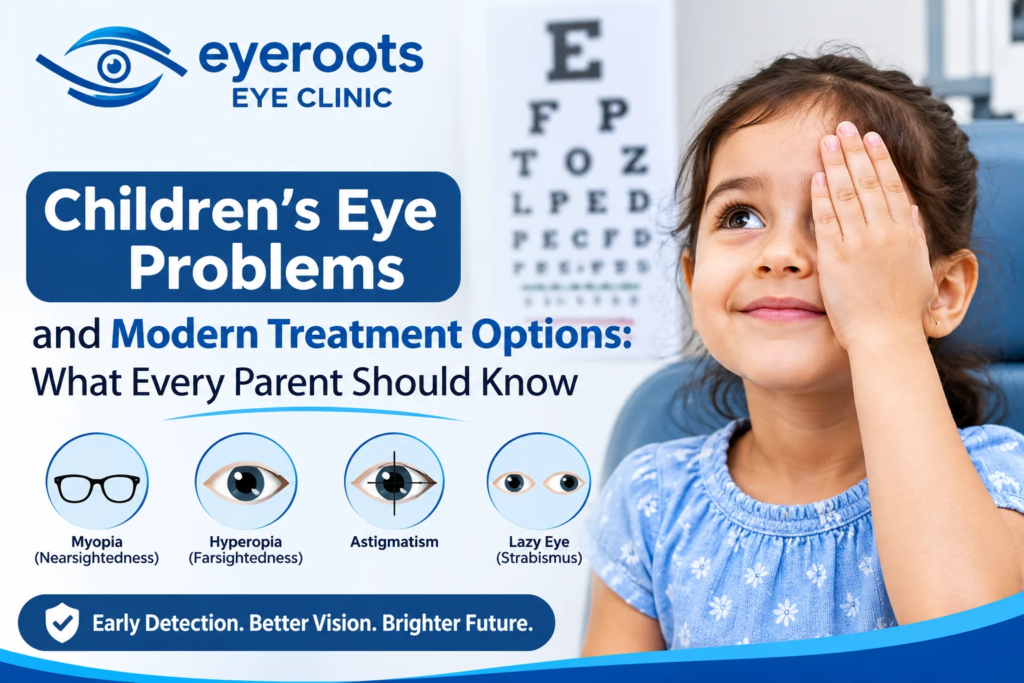
Most parents will know when their child is unwell due to a cough or temperature. However, Eye Problems are not always obvious. It is rare for children to admit that they cannot see the whiteboard and instead may begin squinting, sitting too close to the TV or simply becoming reluctant to read. Luckily there are lots of treatment options now available for treating children’s eyes meaning most issues can be well managed if picked up early.
Common Eye Problems in Children
Refractive errors (myopia, hyperopia, astigmatism). These are the most common reasons children will require glasses. This leads to blurry distance vision, difficulty with near tasks and blurry vision at all distances. Common symptoms include headaches, rubbing eyes and squinting.
Lazy eye (amblyopia) and squint (strabismus). these occur when one eye is weaker than the other or the eyes aren’t aligned. The brain begins to ignore the weaker eye and can cause permanent visual impairment if not treated in time.
Watery eyes. in babies this is commonly due to a blocked tear duct. Many cases will resolve themselves in their first year. Gently massaging the area can help. If they don’t then a doctor should be consulted.
Digital eye strain and dry eyes. due to online classes and mobile gaming, children will blink less causing dry, red and tired eyes.
Less common but serious conditions. Pediatric cataract, drooping eyelids (ptosis), childhood glaucoma and retinopathy of prematurity in premature babies all need early attention.
What’s New in Treating Kids’ Eyes?
Treatment today is gentler and more precise than it used to be.
- Better lenses and glasses: Modern prescriptions and lens options are lighter and more comfortable, so kids are more willing to wear them.
- Myopia control: Specialised approaches, such as certain eye drops and lens designs, can help slow the progression of nearsightedness in growing children. Whether they suit your child depends on a proper evaluation.
- Non-surgical squint and amblyopia care: Patching, vision therapy and prescription glasses often help before surgery is even considered.
- Safer, finer surgery: When surgery is needed, as with cataracts, ptosis or squint, today’s techniques are less invasive and recovery is smoother.
- Smarter dry eye care: Lubricating drops, lifestyle changes and screen-time habits work together to bring relief.
Simple Habits That Protect Your Child’s Eyes
- Every 20 minutes take a break and look at something 20ft away for 20 seconds (20/20/20 rule)
- Try to encourage your child to play outside for at least an hour per day. This is linked to reducing the risk of Myopia.
- Ensure that your child is keeping a good distance from their screens. Try not to use them in the dark.
- Add foods rich in eggs, green vegetables, carrots and citrus fruits.
- Don’t forget your child’s yearly eye tests.
When Should You Visit an Eye Specialist?
If your child is frequently squinting, tilting their head, their eye(s) are pointing in or out, their eye(s) are often red or watery, complaining of headaches or a reduction in school performance then please book an appointment. Even if your child isn’t experiencing symptoms it is still recommended to have their first eye test before they start school.
At Eyeroots Eye Clinic in Faridabad, Dr. Niharika Khute (MBBS, MS Ophthalmology) brings over 11 years of experience as an eye surgeon and treats both children and adults. Parents often mention her patient, soft-spoken approach, which matters a lot when the patient is a nervous child.
Your child’s vision shapes how they learn and play. Visit to explore our child eye treatment services, or book an appointment
Frequently Asked Questions
- At what age should my child have their first eye check-up?
It is recommended to have a basic eye test as a baby, again around 3 years old and a full eye test before they start school. After this they should have one a year or as advised by your doctor. - Can a lazy eye be treated in older children?
The earlier treatment is given the better but older children can still benefit from glasses, patches or vision therapy. A specialist will be able to advise you. - Does screen time cause myopia?
Too much close work and not enough outside time can cause progression of myopia. Taking regular breaks from screens and playing outside will help. - Is my child’s squint just a cosmetic issue?
No, a squint can cause lazy eye and reduced depth perception. It is important to have this assessed in a timely manner. - My baby’s eyes water constantly. Should I worry?
This is often due to a blocked tear duct and will often resolve itself. If there is any discharge, redness or no improvement after around 12 months then please see an Eye Specialist.