
Have you seen an increase in kids wearing glasses? You’re not imagining things—nearsightedness (called myopia) is growing rapidly among children. Many parents are curious, what is going on? A development many people face every day gives us some clues: we’re constantly using “screens” (phones, tablets, and computers).
Due to the increasing use of technology, kids spend hours each day engaged with screens, either from online classes, gaming, or just watching YouTube videos. While technology has improved education, it is beginning to negatively impact children’s eye health in ways we are just starting to understand. So at this time, we need eye treatment for children.
What Is Myopia?
Myopia, also known as nearsightedness, is when children are able to clearly see things that are close to them but have difficulty seeing things that are far away. For instance, a child can read a book without any problem but may not be able to see the board in the classroom. This is because the eye stretches a bit more than usual so that the light focuses in front of the retina and not on it directly. So, objects that are faraway look blurry.
How Is Screen Time Connected?
At present, kids spend hours every day doing “near work”— using a computer, tablet or smartphone for an extended period of time without taking a break—in other words, focusing on objects that are very close to their eyes. When children do an excessive amount of near work for an extended time without taking breaks, their eyes are fixed on one spot for an extended period of time, which can put them at risk for developing myopia in the long term.
An additional factor contributing to the increased incidence of myopia in children today is the decreased amount of time children spend outdoors. In the past, children played outside much more than they do now; now, for many children, screen time has taken over outdoor play.
Playing outdoors exposes children to natural sunlight and helps them to properly develop their vision by allowing them to look at objects located at different distances. By eliminating this opportunity, children have a higher potential to develop myopia.
Signs Parents Should Watch For
Myopia usually happens gradually, and kids don’t always say if something is wrong. That’s why detecting subtle changes is really important.
Some signs that your child may be developing myopia include:
- Squinting to see distant objects
- Sitting very close to the TV or screen
- Complaining of headaches or eye strain
- Difficulty seeing the classroom board
- Rubbing eyes often
If your child shows one or more of these symptoms, it is advisable to take him/her for an eye examination.
Simple Ways to Protect Your Child’s Eyes
Good news: Small daily habits can lead to great accomplishments.
- The “20-20-20 Rule” helps to relax eye muscles after staring at screens for long periods of time. Every 20 minutes, have your child look at something 20 feet away for at least 20 seconds.
- Try to create a screen time limit for your child, but do so in a healthy manner and ensure there are not too many long periods of time spent on screens. Limiting screen time is especially important for younger children.
- Outdoor play is another way to help lower a child’s chance of getting myopia. Encourage your child to spend at least 1-2 hours outside every day. Fresh Air and natural light are both good for the health of the eyes.
- Make sure your child holds their electronic devices, as well as books, at a proper distance. Holding them too close to the eyes can strain the eyes.
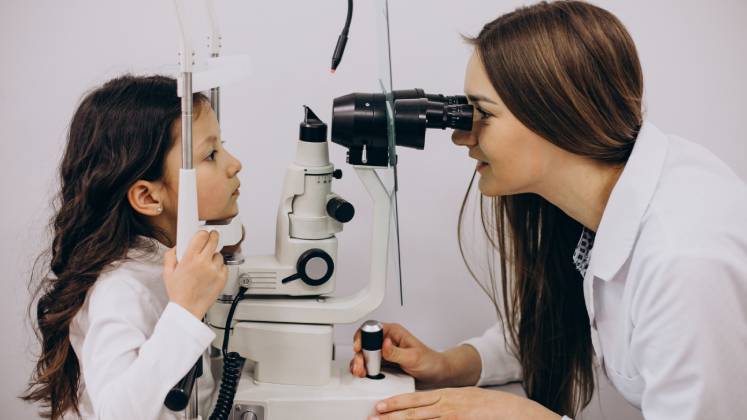
- Taking your child to the ophthalmologist/eyes specialist regularly will help spot any potential problems before they worsen. Regular eye exams are one way to help prevent eye issues.
Why Early Care Matters
If myopia is not managed early, it can increase quickly as the child grows. In some cases, high myopia can lead to serious eye problems including retinal thinning, hole or retinal detachments.
That’s why early attention and proper care are so important. With the right steps, we can protect children’s vision and support healthy eye development.
Final Thoughts
Technology is inseparable from modern life, and we can hardly avoid screens altogether. However, the main thing is balance. By making minor adjustments such as prompting kids to play outdoors, taking screen-free intervals, and regular eye exams we can safeguard our children’s eyes.
As parents, being informed and acting promptly can have a remarkable impact on your child’s vision and health in general. In case you become worried about your child’s eye health or detect any symptoms, it would be better to consult a professional. If you want child eye treatment in Faridabad, then you can book your appointment with us at Eyeroots. We have the best eye specialist, Dr. Niharika Khute, who is committed to delivering the most appropriate care for your child’s eyes.